RMIT Psychology and Social Inclusion Internships
Real immersion and collaboration with our neighbours
Program overview
Get real-world experience and industry contacts to help launch your global career.
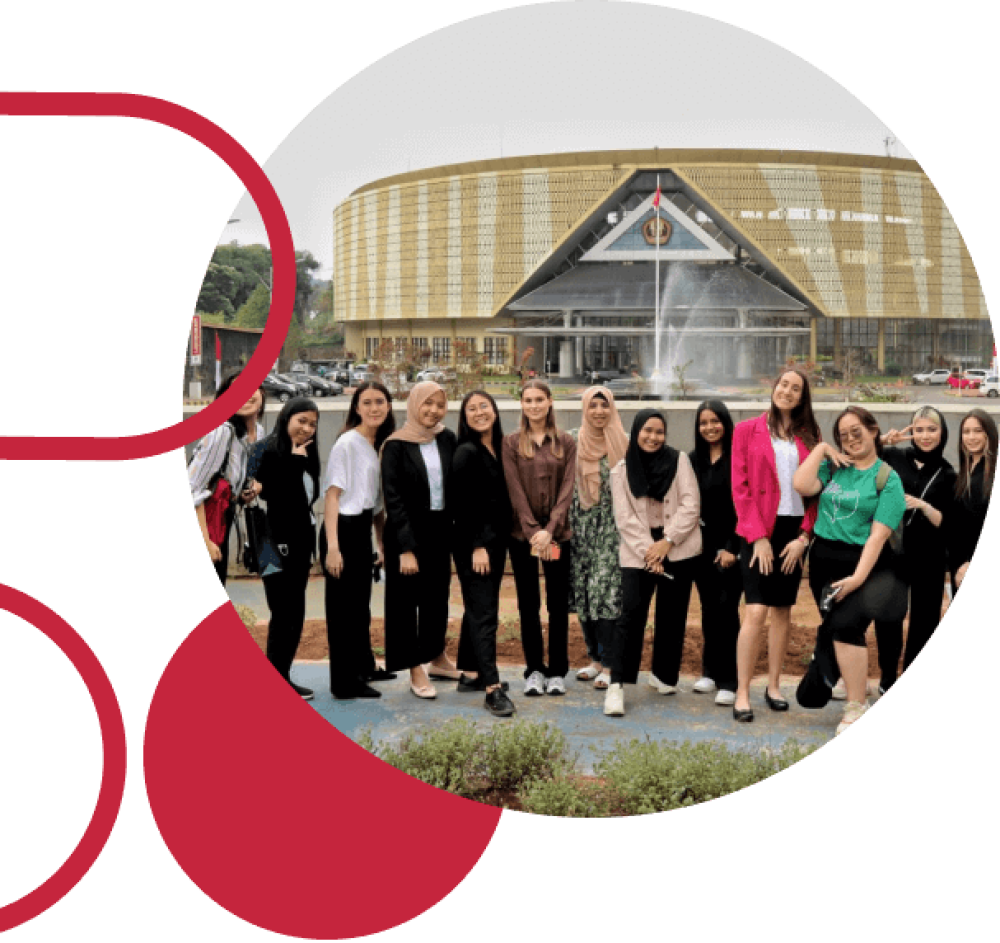
Join a five-week international internship in Indonesia where you’ll explore how psychology and social inclusion work together to support mental health, wellbeing, and stronger communities. The RMIT Psychology and Social Inclusion Internship brings you together with local Indonesian students, academics, and organisations to tackle real-world challenges affecting marginalised groups and community wellbeing.
You’ll work in cross-cultural teams to co-develop practical solutions to social and mental health challenges, guided by experts from Universitas Padjadjaran (UNPAD). Alongside your project work, you’ll build your Indonesian language skills, visit leading mental health and community organisations, and experience local culture through immersive activities. The program concludes with a public symposium where you’ll present your work to academics, industry representatives, and community stakeholders.
This experience helps you build professional skills, global networks, and cross-cultural understanding while preparing you to contribute to inclusive health innovation and social impact in Australia and the Indo-Pacific region.
There are limited $5,000 NCP grants available to eligible students, so apply now to secure your spot.
Program features
A Complete Global Learning Experience in Psychology and Social Inclusion
Indonesia faces significant mental health and social inclusion challenges, including limited access to psychological services, stigma surrounding mental illness, gender inequality, and barriers for people with disabilities and marginalised communities. In this internship, you’ll apply your psychology knowledge within this real-world context, developing practical, culturally responsive solutions alongside Indonesian partners.
What you’ll gain
-
Applied experience in Indonesia’s mental health landscape
Work on projects addressing challenges such as youth mental health, community wellbeing, trauma-informed practice, disability inclusion, and equitable access to services. -
Cross-cultural problem-solving
Collaborate in teams with Indonesian students and academics to design solutions that respond to social, cultural, and systemic realities. -
Focus on social inclusion
Explore how inclusive practice supports women, people with disabilities, and underserved communities to participate fully in society. -
Academic mentorship and research-informed practice
Receive guidance from Universitas Padjadjaran (UNPAD) academics with academic oversight from RMIT, ensuring rigorous and contextually grounded project work. -
Public symposium presentation
Present your team’s work at UNPAD to academics, institutional partners, and stakeholders, strengthening your professional confidence and communication skills. -
Global professional capability
Develop the adaptability, intercultural competence, and ethical awareness required for psychology practice in diverse international settings.
2024 Project Topic
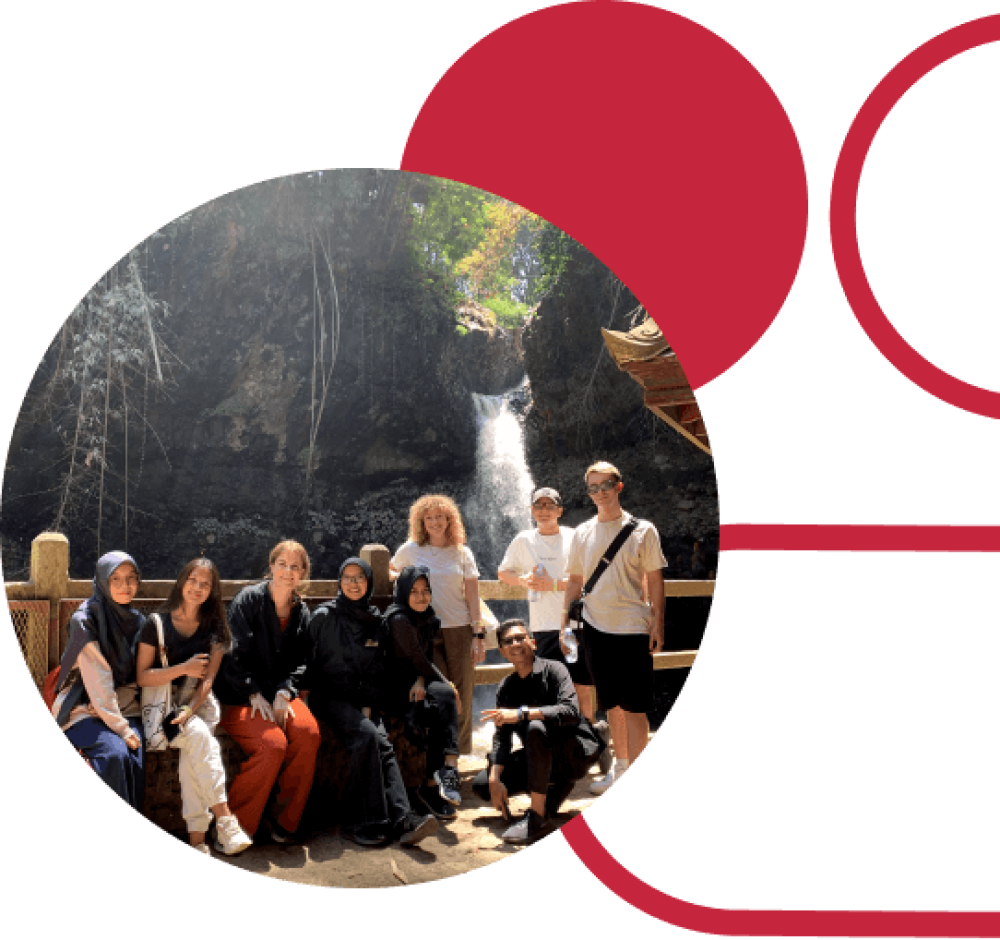
In 2024, RMIT students participated in the “Live by The River: A Psychological Portrait of An Urban Community” where students were able to apply photovoice methods for community assessment. Students researched how the environment of the villagers living near the Cikapundung river affect human behaviour and vice versa and what practices the community applies to maintain their (mental) well-being.
Organisational Visits
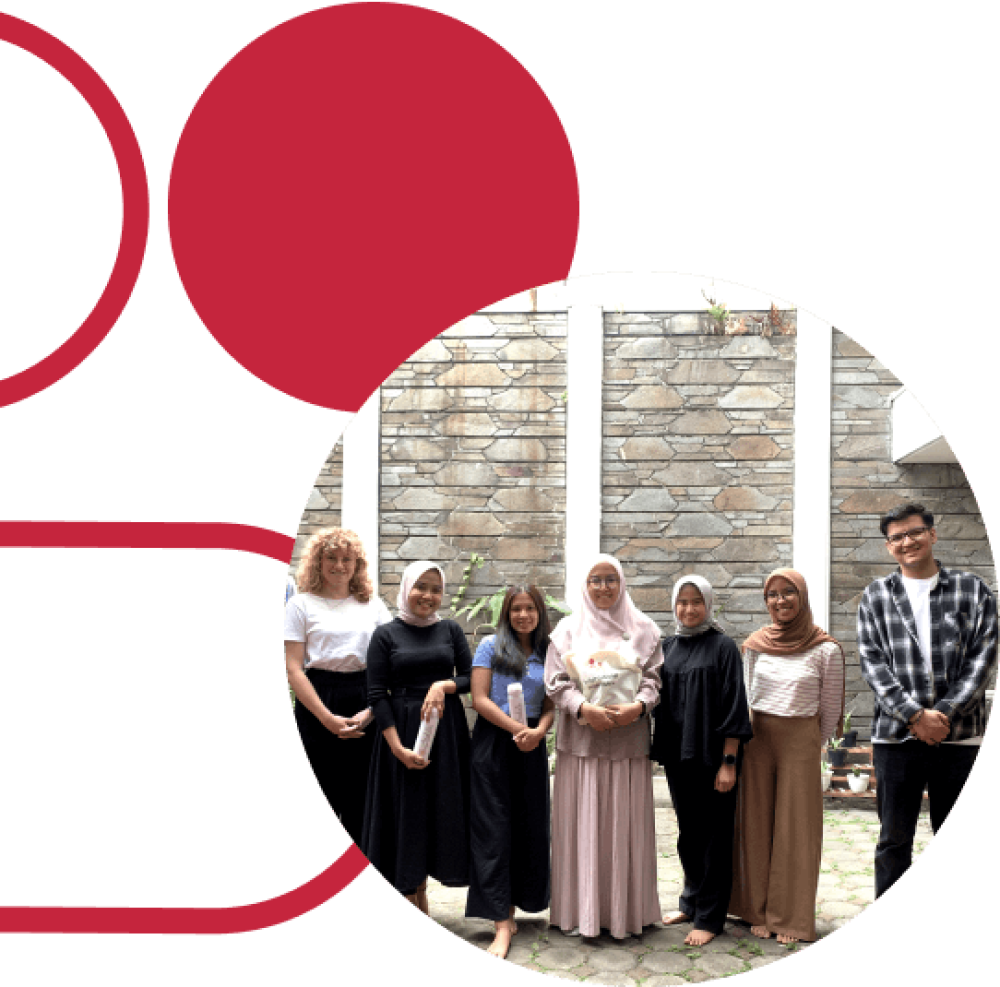
Gain insight into how Indonesian organisations are responding to complex mental health and social inclusion challenges across diverse communities. These visits expose you to innovative, culturally grounded approaches to care, advocacy, and community development.
You can expect to hear from practicing psychologists, Australian and Indonesian government departments, not-for-profits operating in the community, academics from UNPAD, health clinics and more!
What you’ll experience
-
Mental health innovation in action
Visit counselling centres, psychology clinics, art therapy labs, and community-based services addressing rising demand for mental health support. -
Community-based inclusion initiatives
Learn how organisations work to reduce stigma, promote disability rights, support women’s empowerment, and strengthen youth wellbeing. -
Exposure to alternative and holistic approaches
Explore practices such as art therapy and community development enterprises that integrate cultural and environmental perspectives into wellbeing. -
Understanding systemic barriers
Gain insight into challenges such as workforce shortages, rural service access, and social stigma surrounding mental illness. -
Professional networking
Connect with practitioners, community leaders, academics, and emerging professionals working at the forefront of inclusive health and social reform in Indonesia.
Previous Program Visits
- The Australian Embassy, Jakarta
- The Center for Psychological Innovation at Universitas Padjadjaran
- Psychological Consultation Bureau
- The Widyatama Art Therapy Center: Aiming to develop the abilities of children with special needs including behavior and life skills based on art & design.
- Anahata Holistic Psychology Service: A centre providing counseling for Children, Teenagers, Adults, marriage and other services related to psychology areas.
Cultural Immersion & Networking
Understanding Indonesia’s cultural, social, and community context is essential to effective psychological and inclusive practice. Through immersive language and cultural learning, you’ll build the awareness and communication skills needed to work respectfully and effectively across cultures.
You will be immersed in Indonesian language and culture, supporting you to develop relationships, transferrable intercultural working skills and fantastic memories.
This includes
-
Structured Indonesian language learning
Complete 30hrs of language training through UNPAD’s BIPA program including formal language assessments. -
Intercultural capability development
Participate in workshops exploring cultural values, family systems, religion, community structures, and their influence on mental health and help-seeking behaviour. -
Collaboration with Indonesian students
Work alongside local peers to understand diverse perspectives on wellbeing, inclusion, and social responsibility. -
Cultural immersion experiences
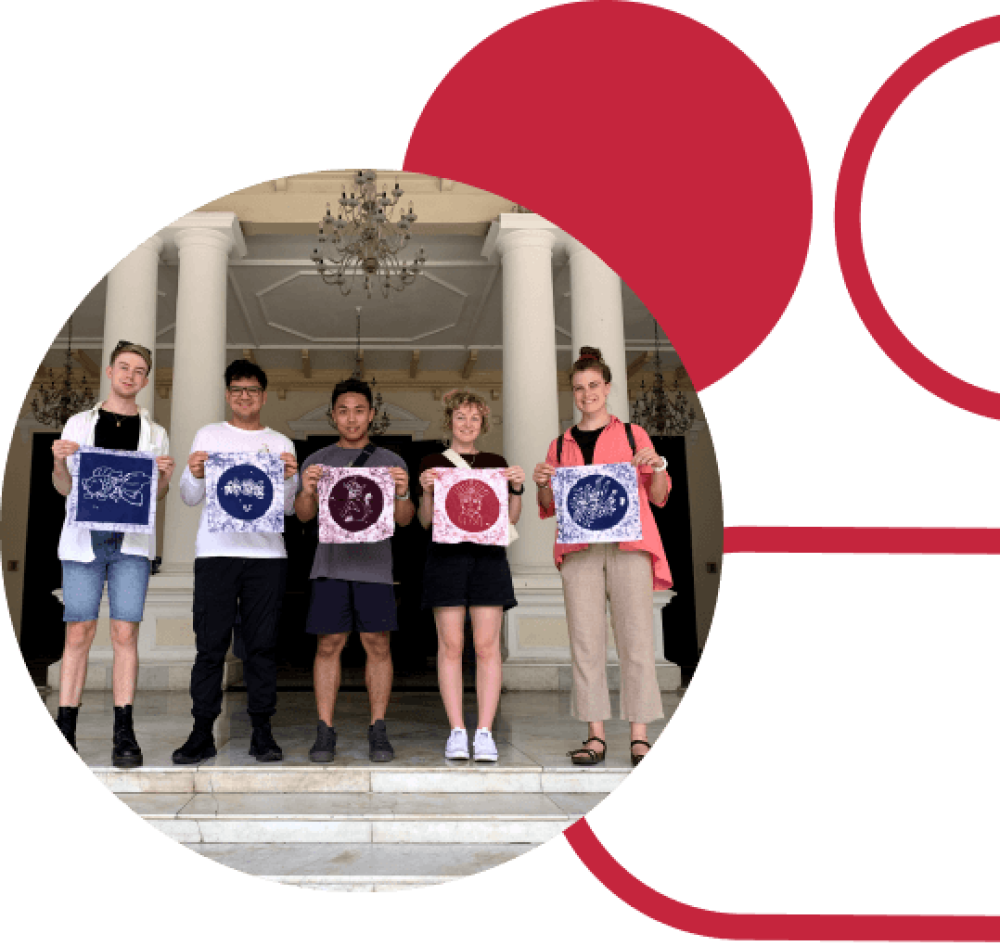
Engage in organised cultural activities that strengthen your understanding of Indonesian society and everyday community life. Engage in social and cultural activities with your Indonesian buddies. -
Contextually informed practice
Develop the cultural sensitivity and ethical awareness required to apply psychology meaningfully in Indonesia and other diverse global settings.
Hosts and Projects
Complete a real-world project for an Indonesian host organisation in-country
Yayasan Jari
Yayasan Jaringan Relawan Independen (JaRI) is a Bandung-based civil-society organisationfocused on preventing and responding to violence against women and children. JaRI works through education, psychosocial support, community strengthening, and multi-stakeholder referral networks that are survivor-centred and rights-based. For prevention, JaRI delivers the “Child Safety from Sexual Violence” program, a participatory, play-based workshop for primary-school children, designed to be child-friendly, gender-responsive, and grounded in child rights.
Project
Child Safety & Gender-Responsive Prevention of Sexual Violence (Urban–Rural Bandung)
Location: Bandung, Java
Project Background
Child sexual violence is a critical issue that can affect children’s mental health, sense of safety, social development, and learning outcomes. Effective prevention requires age-appropriate body literacy, emotional awareness, personal boundaries (offline and online), and access to trusted adults and services. This project also adopts a gender-justice lens: it recognises how gender norms may increase vulnerability, strengthen children’s agency, and promotes safer, more inclusive school cultures.
This internship is designed as a real-life project aligned with the RMIT Psychology & Social Inclusion Internship outcomes. Students participate as workshop facilitator, learning through practice, ethical reflection, cross-cultural teamwork, and meaningful contributions to host-organisation needs. Interns will engage in two settings—an urban primary school in Bandung City and a rural/peri-urban primary school in Bandung Regency (Rancaekek)—to gain comparative learning about risk factors, resources, and child protection practices across Metropolitan Bandung.
Project Objectives
1. Provide practical experience for RMIT and UNPAD students to understand the role of community/psychosocial service organisations in school and community settings.
2. Build students’ facilitation competencies for child-friendly, gender-responsive prevention workshops using play-based methods (Years 1–3) and participatory discussion/role play (Years 4–6).
3. Strengthen cultural and social awareness through an urban–rural comparison and guided reflection on ethics and safeguarding.
4. Support JaRI to produce reusable facilitation documentation, context adaptations, and program improvement recommendations based on field learning.
5. Meet RMIT learning requirements: minimum 120 hours, professional communication and teamwork, socio-cultural awareness, and ethical/professional reflective practice.
Relevant disciplines
Students from the following (or related) disciplines are encouraged to apply:
● Psychology
● Other relevant majors: Education, Social Work, Public Health, Gender Studies, Community Development, or related fields
Project Outcomes
Output 1 – Facilitation Package (Urban & Rural)
A ready-to-use facilitation package for two schools (urban & rural), including session run-sheets, facilitator roles, materials list, short scripts, age-appropriate instruction variations for Years 1–3 and Years 4–6, and context adaptation notes.
Output 2 – Child Safety Workshop Implementation
Delivery of the “Child Safety from Sexual Violence” workshop at two primary schools (Bandung City & Rancaekek, Bandung Regency) as co-facilitators for games/activities based on JaRI modules. Includes post-session debrief and process notes.Output 3 – Reflective Learning Report + Final Presentation
A concise report (approx. 8–12 pages) summarising activities, key learnings (psychology & social inclusion), ethics and safeguarding reflections, urban–rural comparative insights, and practical recommendations—presented in a final presentation.
Required Skills and Knowledge:
- Empathic, clear interpersonal communication (with children and adults)
Basic facilitation/public speaking skills (or strong willingness to learn)
Cross-cultural teamwork and adaptability in the field
Attention to detail in following safeguarding and ethical protocols
Understanding of the foundations of child development (primary-school age)
Introductory understanding of gender, social inclusion, and gender-based violence
Basic digital literacy relevant to children’s online safety
Note: This project is subject to change, students will be advised prior to finalising their placement.
PartnerInc
PartnerInc was established in 2017 as a collaborative people development firm built on theprinciple of #ExperttoExpertDialogue. It partners with individuals and organizations to co-create relevant solutions, and drive sustainable behavior change through engaging and meaningful learning experiences. Its integrated services include Learning Partner, HR Partner, Assessment Partner, PartnerInc Life as its psychological center, and inClass as an interactive platform for practical and applied learning.

Project
Digital Learning Module Development
Location: Bandung, Java
Project Background
PartnerInc recognises that many students and early-career professionals face psychological barriers when developing their careers. Common challenges include low self-confidence, fear of making mistakes, hesitation in using English in professional settings, and uncertainty about personal strengths. These barriers can limit participation, communication effectiveness, and career progression, particularly in multicultural or international environments.
This project aims to develop a psychology-informed digital learning module that supports learners in strengthening their self-esteem and confidence in career development, including communication confidence in professional English contexts where relevant. The specific emphasis (self-esteem development or English confidence for career growth) will be validated during the initial research phase to ensure contextual relevance and feasibility.
Project Objectives
- Conduct a literature review on self-esteem, confidence, and career development psychology
- Identify key psychological barriers affecting early-career individuals
- Develop a structured Learning Plan using adult learning principles
- Create visual learning aids that illustrate common career confidence challenges
- Design a reflective worksheet that helps learners assess their current confidence level and identify actionable development steps
- Present a structured digital module prototype suitable for educational or organisational use
Relevant disciplines
Students from the following (or related) disciplines are encouraged to apply:
- Psychology
- Learning Design
- Communication and Media Studies
Project Outcomes
Output 1: Topic Validation & Research Summary
– Short research summary of selected topics
– Identification of key themes
– Supervisor approval of final module focus
Output 2: Learning Plan Document
– Clear learning objectives
– Target learner profile
– Structured session outline
– Learning experiences
Output 3 – Visual Learning Aids & Worksheet
– Visual Aid (Slide Decks)
– Learner worksheet including reflection prompts and action planning tools
Output 4 – Final Presentation
– Overview of module structure and design
– Demonstration of visual materials
– Recommendations for future enhancement and promotional strategy
Required Skills and Knowledge:
- Interested in learning & development and psychological topics
Skilled in utilizing various visual media, including Canva
Willing to revise based on feedback
Basic communication and teamwork skills
Proactive, responsive, and dedicated to finishing the job
- Interested in learning & development and psychological topics
Note: This project is subject to change, students will be advised prior to finalising their placement.
Faxtor
Faxtor Indonesia is the first digital psychological assessment platform and test publisher in Indonesia, established in 2018. Developed entirely by local experts to address real-world challenges in psychological measurement, the company has grown into an internationally recognised organization. It is a formal member of the Association of Test Publishers (ATP) and the International Test Commission (ITC), positioning itself as a leader in the digital transformation of psychological testing for bureaus, psychologists, and corporations.
The organization’s main activities are centered around three core service pillars: Assessment,Learning, and Platform Provision. As an Assessment Provider, Faxtor offers white-label online measurement tools specifically designed for professional psychological testing. Through its Faxtor Learning division, it facilitates the professional development of practitioners by providing training on the usage, interpretation, and intervention strategies of these tools via live sessions or video-on-demand.
Additionally, Faxtor operates as a technology partner through its Testing Innovation service, which functions as a Platform as a Service (PaaS). This allows various institutions to digitize and administer their own testing processes online using Faxtor’s secure infrastructure. By combining scientific measurement with advanced technology, the company’s primary mission is to provide a comprehensive ecosystem for responsible, innovative, and accessible psychological assessment in Indonesia.
Project
Development and Commercialization of Psychological Assessment Tools
Location: Bandung, Java
Project Background
Students will explore a case study of how Faxtor as a test publisher company launch new psychological assessment tools – starting from research & development, creating product learning modules, and setting up a Go to Market strategy to commercialize and sell the tools.
The project will involve 3 divisions and is allocated into 3 phases:
Phase 1 – Research and Development
Students will receive hands-on learning and practice on producing psychological assessment tools, including data validation, testing, and other technical activities.
The supervisor for this phase will be from Research & Development
Phase 2 – Product Learning and Engagement
Students will create an end-to-end concept on how to disseminate and teach the assessment tools to our psychologist. The concept will take various forms such as learning video, modules,articles, webinar, workshop, etc.
The supervisor for this phase will be a Product Learning & Engagement Lead
Phase 3 – Commercialisation
Once the assessment tools are settled among our psychologist and researcher, students will develop a Go to Market strategy on how Faxtor can sell to corporates, universities, and more. Activities will include competitor analysis, marketing strategy, pricing, etc.
The supervisor for this phase will be a Business Analyst & Growth Strategist.
Students are also expected to give an international / Australian perspective on how to develop and commercialize psychological assessment tools.
Project Objectives
Support the development of psychological assessment tools through research, testing, and validation activities.
Design engaging learning materials to help psychologists understand and apply the assessment tools.
Develop a go-to-market strategy for introducing the tools to organisations such as corporates and universities.
Contribute international perspectives on best practices in psychological assessment development and commercialisation.
Relevant disciplines
Students from the following (or related) disciplines are encouraged to apply:
- Psychology
- Business Management
- Learning Design
Project Outcomes
During the internship, students will contribute to three main deliverables:
- Phase 1 – Research and Development: Data validation and testing result.
Phase 2 – Product Learning and Engagement: Tools learning concept, can be in the form of topline ideas of tutorial videos, modules,webinars, etc.
Phase 3 – Commercialisation
Competitor analysis (Indonesia and international), marketing strategy, and other commercial related output. - All the deliverables will be compiled in an end-to-end presentation deck.
- Phase 1 – Research and Development: Data validation and testing result.
Required Skills and Knowledge:
Basic knowledge of psychometry, psychology, and HR industry will be a plus
Critical thinking and analytical mindset
Creativity
Communication and relationship building
Public speaking
Note: This project is subject to change, students will be advised prior to finalising their placement.
PIP UNPAD
PIP Unpad provides evidence-based psychological assessment and intervention services designed by practitioners and academics. Our services include assessments of potential and competencies, as well as interventions for individuals and organizations. Supported by advancements in science and technology, PIP Unpad operates under the motto TeMan (Temukan Jalan, Teruskan Manfaat / Find the Way, Continue the Benefit), accompanying individuals and organizations in achieving well-being and making positive contributions to their environment through integrated psychological services.

Project
Exploring Disability Inclusion Programs in Practice - Teman Disabilitas
Location: Bandung, Java
Project Background
As psychology professionals, our responsibility is not limited to understanding individuals in ideal conditions, but also human functioning across different contexts and abilities. Individuals with special needs represent an important group in psychological services, which reflects a wide range of individuals’ experiences and interactions to adapt to the environment. These individuals experience unique circumstances and barriers in many areas of life, one of them being the educational sector. Exposure to this setting will enable us to develop practical understanding, observation skills, empathy, and awareness, especially for students. This project is designed to provide students with practical exposure to observe inclusive educational environments, identifying the best teaching strategies to accommodate special needs students.
Project Objectives
- To develop awareness of special needs education in practices
- To gain an understanding of the learning experience of students at Special Educational
Needs Schools (Sekolah Luar Biasa) - To identify the best practices for educating students with a variety of special needs
- To increase the students’ professional observation and analysis skills
- To foster empathy, awareness, and inclusive perspectives within the students
Relevant disciplines
Students from the following (or related) disciplines are encouraged to apply:
- Psychology
- Education
- Social Work
Project Outcomes
During the internship, students will contribute to three main deliverables:
- Field Research Report
a. Design a structured research methodologies for field research in Special Education Needs School
b. Intake the data about learning strategies, classroom dynamics, student engagement etc by various methodologies (observation, interviews, FGD, etc)
c. Analyze and develop comprehensive report summarizing observations and insights - Presentation of Findings
a. Prepare and deliver the presentation summary of field research findings
b. Share insights and reflections - Psychoeducational Materials (Video/Posters/etc)
a. Turn the research insights into a simple psychoeducational materials (posters,
short videos, etc)
Required Skills and Knowledge:
- Qualitative research
- Interview & observation skills
- Analytical skills
- Presentation skills
- Interest in educational psychology
- Adaptability & cultural sensitivity
Note: This project is subject to change, students will be advised prior to finalising their placement.
Dates & fees
| Psychology and Social Inclusion | |
|---|---|
| Duration | 5 weeks |
| Arrival in Indonesia | 13 June 2026 |
| Start | 15 June 2026 |
| End | 18 July 2026 |
| App close | 24 April 2026 - deadline extended |
| Fee | $5,300 |
| NCP Funding* | $5,000 |
*A limited number of grants are available to eligible students. Learn more.
Inclusions & exclusions
Inclusions
- Industry project placement and support
- Private room accommodation in a shared apartment or co-living arrangement
- Pre-departure support, including visa advice and sponsorship where required
- Administrative support, including academic credit approval (if applicable)
- Airport transfers on nominated arrival and departure dates
- Immersive orientation program
- Intercultural communication workshop
- Approximately 30 hours of Indonesian language classes
- Industry visits
- Career development workshop
- Explore the surrounding areas with an organised weekend trip
- Cultural and social events with Indonesian buddies
- 24/7 in-country support
- Weekly check-ins
- International internships completion certificate
- Connection with Indonesian students from local universities
- Transport to organised events
Exclusions
- Internet, phone and home working set-up
- Flight costs, airport taxes and associated fees
- Visa costs and passport fees
- Travel insurance
- Most meals
- Enrolment fees for any subjects at your university
- Host-specific requirements (ie. uniform, safety equipment)
- Vaccinations (if required)
- Laundry, toiletries and amenities
- Extra activities and travel, or any other items of a personal nature
- Daily transportation costs
Why Indonesia?
Opportunities abound with this key partner and centre for regional strategy and economic development
Indonesia has the largest economy in Southeast Asia, and is predicted to be the world’s fifth-largest economy by 2030. Australia and Indonesia signed the Indonesia-Australia Comprehensive Economic Partnership Agreement (IA-CEPA) in 2020, marking the beginning of a new era of enhanced strategic and commercial cooperation. Opportunities abound in a diverse range of areas, including business and trade, finance, technology, infrastructure development, education, environmental conservation, security and more.
Click here to learn more about the opportunities Indonesia has to offer you.

Course credit
We support you to earn credit for your course
You can earn credit at RMIT through this program by enrolling in the following units:
BESC1492: Psychology Field Placement
For more information, please contact the subject coordinator.
Both domestic and international students are eligible to join this program, although only Australian citizens are eligible to receive an NCP grant. See ‘Grants & funding’ for more information.
Grants & funding
$5,000 NCP grants are available for this program
New Colombo Plan (NCP)
You are likely to be eligible for an NCP grant if:
- You are an Australian citizen
- You are an undergraduate student at RMIT
- This experience will count toward your uni degree
- You have received no more than one NCP grant previously (no more than two in total)
And the best part is that because they are grants, not loans, you don’t need to pay them back!
Connect with your International Office to confirm your eligibility or discuss it with our team during your initial consultation and we will point you in the right direction. Note that you will be advised whether or not you have been allocated a grant before you need to accept your spot on the program.
Grants are limited and are distributed on a first-come-first-served basis, so apply early for your best chance of receiving one!
OS-HELP repayable loan
OS-HELP is a loan available to eligible students enrolled in a Commonwealth supported place who plan to undertake some of their study overseas. If your experience with us will count towards the requirements for your Commonwealth supported course in Australia, you may be able to borrow up to $10,130. You may also be eligible to borrow an extra $1,395 if you study Indonesian language in preparation for your internship. Learn more about OS-HELP here.
Other funding options
Learn about all other funding options that might be available to you, on our webpage here.
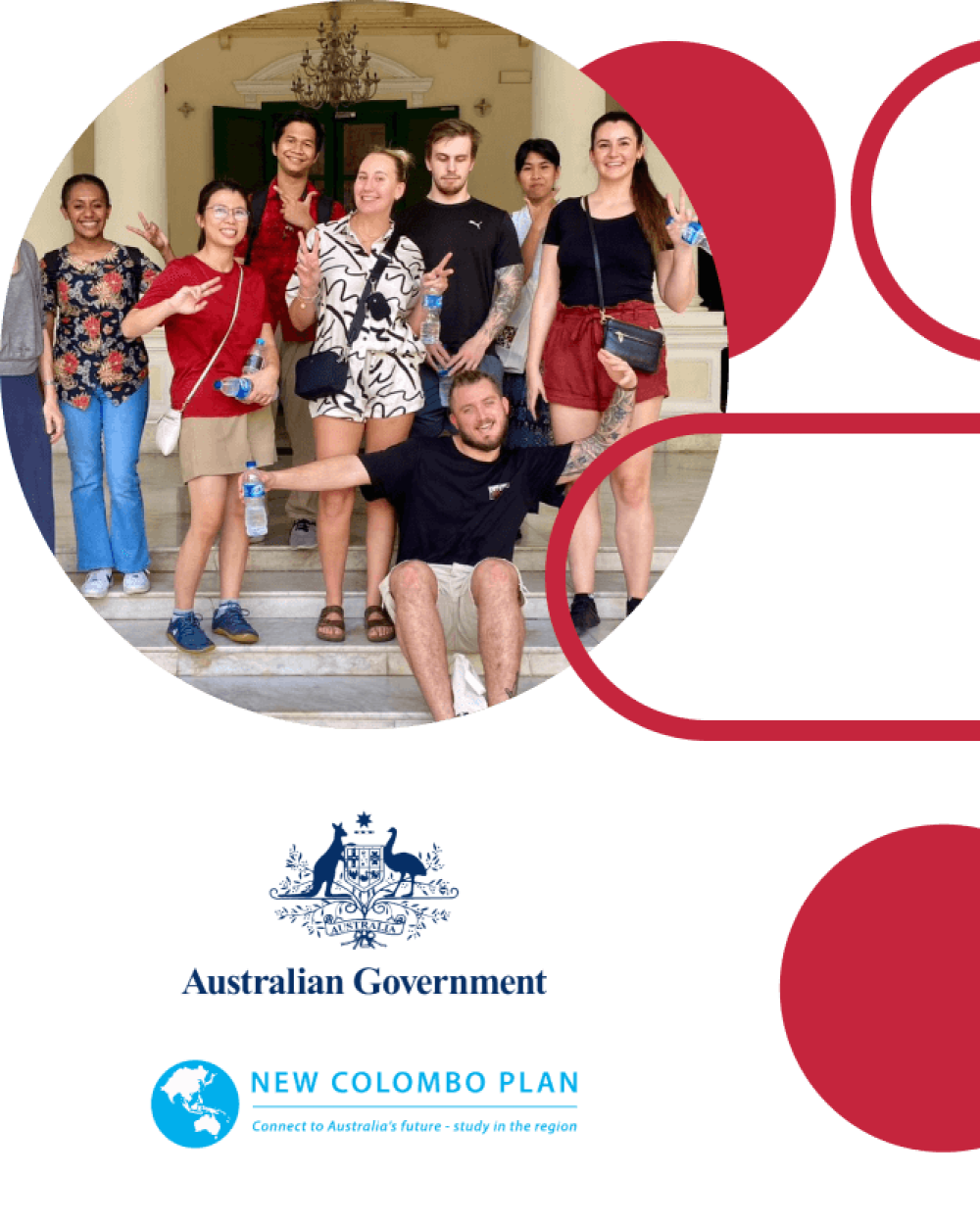
Past information session
Find out more about internships we offer, fees, grants and credit
Have your questions answered
Find out more about internships we offer, fees, grants and credit
View our online information session
Attend our online information session
Attend one of our online drop in sessions
| When | Time | Link |
|---|---|---|
|
Wednesday 18th Mar 2026 |
2:00pm – 3:30pm AEST |
|
|
Wednesday 8th Apr 2026 |
10:30am to 12:00pm AEST |
|

Apply by 17 March 2026

Apply to RMIT

Confirm your spot

Finalise and prepare
What next?
Book in a chat with us to discuss your options
We make everything as easy as possible for you, and it all starts with a commitment-free consultation.
Click below to book your obligation-free consultation, or just email us with any questions:
info@internationalinternships.com.au
Hear from our students
Hear from some of our students who have undertaken the Psychology Program

"When I was in Indonesia, I did an internship with Edelman, a Communications and PR firm. I had the most amazing experience, and I have since landed an incredible job from it!"

"When I was in Indonesia, I did an internship with Edelman, a Communications and PR firm. I had the most amazing experience, and I have since landed an incredible job from it!"

"When I was in Indonesia, I did an internship with Edelman, a Communications and PR firm. I had the most amazing experience, and I have since landed an incredible job from it!"

"When I was in Indonesia, I did an internship with Edelman, a Communications and PR firm. I had the most amazing experience, and I have since landed an incredible job from it!"

"When I was in Indonesia, I did an internship with Edelman, a Communications and PR firm. I had the most amazing experience, and I have since landed an incredible job from it!"