ICT Professional Practice Internships
Gain global experience and university credit supported by a $15,000 grant

Program overview
Internships tailored to your field of study
Boost your ICT Professional Practice experience by interning with an Indonesia-based organisation in your industry of choice. Gain hands-on industry experience and build valuable connections to kickstart your global career.
Join a community of Australian university students and take part in a variety of professional, cultural, and social events. Our dedicated team provides full support throughout your journey, including 24/7 in-country assistance while you're in Indonesia.
What you can expect:
- Spend 11 weeks in Indonesia including a one-week language and culture intensive and a 10 week internship
- Gain industry valued work experience
- Earn credit towards you university degree (pending faculty approval)
- Access funding through a New Colombo Plan grant of up to $15,000
- Develop sought-after intercultural skills that set you apart in the job market
- Build lifelong friendships and expand your professional practice
Complete your internship on-site in Indonesia with comprehensive support from our local team.
Program details
We Help You Find the Right Role
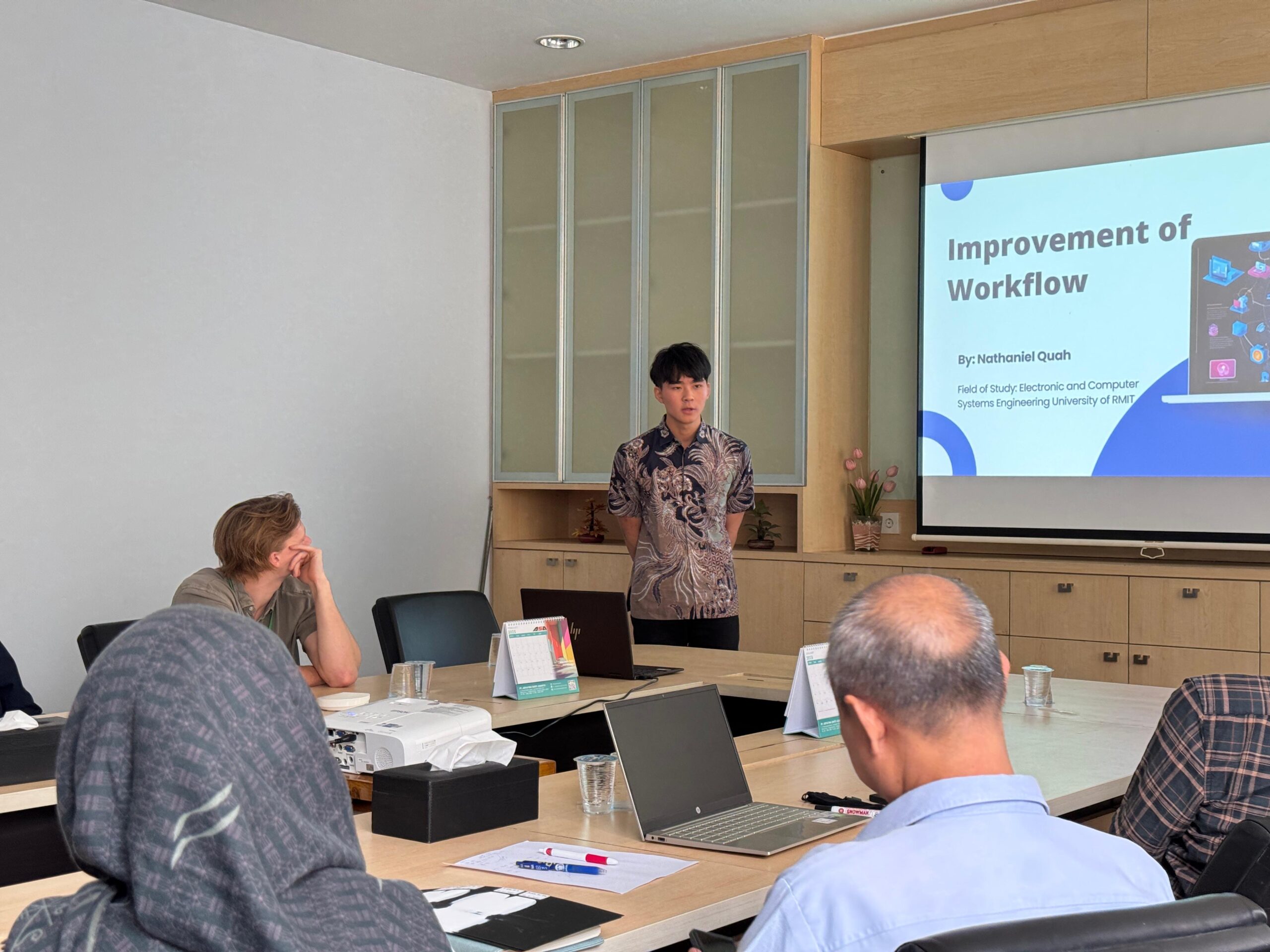
Over 10 weeks, you will intern with a qualified supervisor at your Indonesian host organisation, gaining hands-on experience directly tied to your area of study. We partner with leading organisations across diverse industries, offering internships in all fields sectors.
We are focused on finding the perfect role in the right organisation for you, delivering a fully personalised internship experience. Past interns have worked on impactful, real-world projects - from developing a bilingual venture screening AI chatbot and advancing urban transportation systems to innovating in pharmaceutical manufacturing and tackling environmental challenges.
Throughout your internship, the International Internships team provides ongoing support, including regular check-ins to help you excel in a dynamic, global work environment.
Focused on Your Professional Development
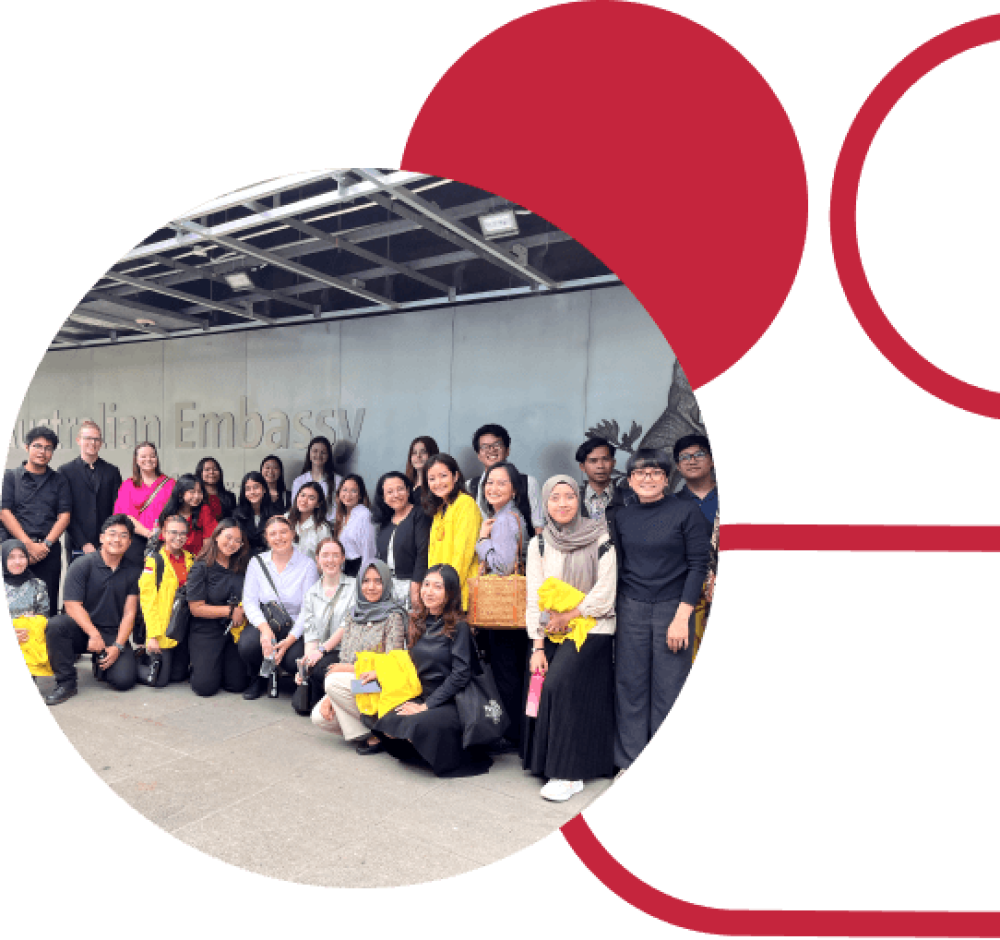
As part of your internship, you'll have the opportunity to visit industry organisations and associations such as AECOM Indonesia, the Australian Embassy and the Indonesia-Australia Business Council. These visits offer a behind-the-scenes look at leading companies and innovative projects across Indonesia, giving you a deeper understanding of how ICT principles are applied in real-world settings. It’s a chance to network with industry professionals and fellow international students, gain insights into global ICT practices that will position you for a global career based either within Australia or abroad.
Cultural Immersion & Networking
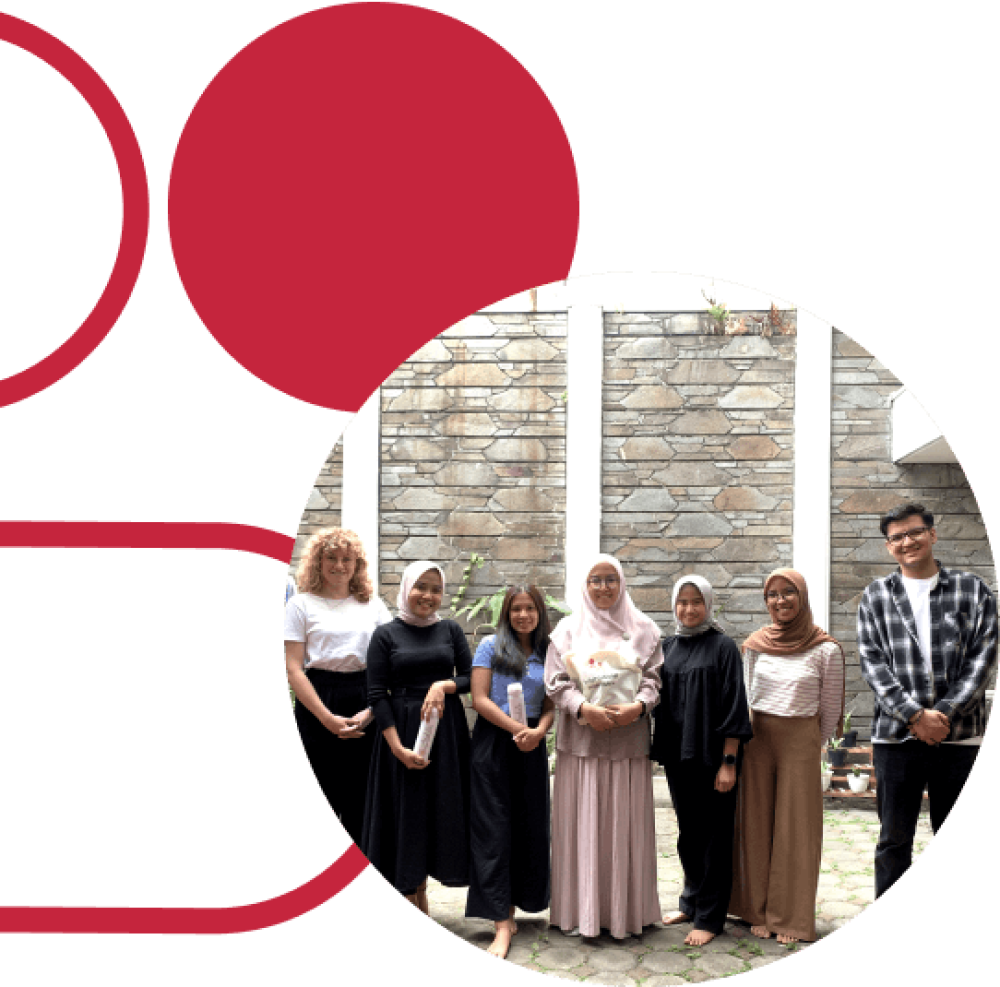
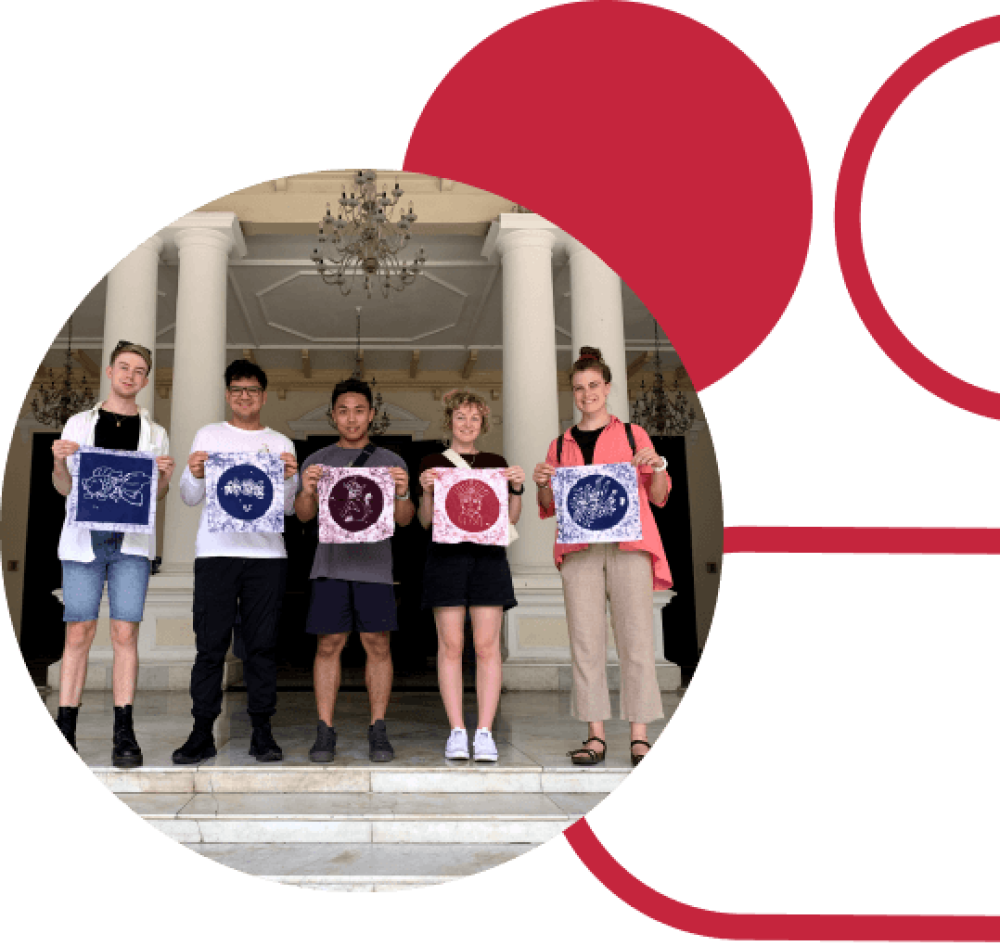
Dive into the vibrant culture of Indonesia while making new friends and expanding your global network! Alongside your internship, you’ll enjoy cultural events, fun social activities, and networking meetups with local professionals and international students. It’s the perfect mix of career growth and unforgettable experiences—helping you build connections and communication skills while having an amazing time.
Your internship will begin with a one-week language and culture immersion including an orientation session to help you get started.
Example Hosts and Project
Some of the real-world challenges our interns have worked on - book a chat with us to find your project
Orangutan Information Centre (North Sumatra)
Yayasan Orangutan Sumatera Lestari – Orangutan Information Centre (YOSL-OIC) is a grassroots NGO based in Medan, North Sumatra. OIC works closely with local communities living alongside orangutan populated areas in both the Leuser Ecosystem and the Batang Toru Ecosystem. Initially established in 2001, solely as a dedicated information centre about orangutans, OIC has since expanded their scope, embarking on multiple initiatives aimed at forest protection, wildlife conservation, and the enhancement of community livelihoods through the introduction of sustainable agricultural practices.
Past Project
Developing a Mobile Application for an Automated Plant Watering System using Hydraulic Drums
Location: Medan, North Sumatra
Project Background
Efficient water management is essential in agriculture to support healthy crop growth and maximize yields. Traditional watering methods are often labor-intensive and may fail to ensure even or efficient water distribution. This project addresses these challenges by leveraging automation and hydraulic systems to optimize agricultural water management.
The hydraulic drums combined with the mobile application will enable precise scheduling and real-time adjustments, empowering farmers to remotely manage their crops with efficiency and accuracy, enhancing productivity and sustainability.
In this project, the Computing Technology team will collaborate with a Mechanical Engineering team. The Mechanical Engineering team will work on the design of the hydraulic drums, while the Computing Technology will focus on developing a mobile application connected to the drums.
Project Objectives
The objective of this project is to develop a mobile application for controlling an automated plant watering system integrated with hydraulic drums. This involves designing a user-friendly application, engineering the hydraulic system for efficient water distribution, and conducting real-world testing to ensure seamless operation and precision in agricultural settings.
Relevant Fields
- Web Development
- IT Programming
Project Outcomes
- Mobile Application Prototype: A functional prototype of the mobile application with features for remote control and monitoring of the automated plant watering system.
- User Interface Design: A user-friendly interface optimized for intuitive operation and real-time adjustments.
- System Integration Plan: Documentation detailing the seamless integration of the mobile application with the hydraulic drum-based watering system.
- Testing and Performance Report: Results of real-world testing, including system reliability, user feedback, and recommendations for improvement.
- Final Documentation: Comprehensive project documentation outlining the design process, system architecture, and guidelines for deployment and scaling.
- Training Materials: Instructional content or user guides to assist farmers in adopting and utilizing the mobile-controlled watering system effectively.
Note: This project is being revised by the RMIT academic supervisor and the scope may be split amongs different teams or reduced. Further details on the project and its outcomes will be provided closer to the start date.
Sampangan
Sampangan is centered around sustainable waste management through innovative and circular solutions. Their core activity involves converting organic waste—particularly agricultural and forestry byproducts—into high-value, eco-friendly materials. Utilizing a patented carbonization process, Sampangan produces activated carbon and liquid bio-smoke (asap cair) from biomass such as coconut shells. These products have diverse environmental applications: activated carbon is used for water purification and filtration of organic pollutants, while bio-smoke acts as a natural disinfectant and ammonia reducer in poultry farms. By turning waste into useful resources, Sampangan not only supports environmental sustainability but also promotes a circular economy that benefits communities and industries alike.
Past Project
Design and Development of a Web-Based Decision Support Platform for Sustainable Business Feasibility
Location: Jakarta
Relevant Fields: Web Development, IT Programming
Project Background
As Sampangan continues to expand across multiple business lines—including circular carbon products, agriculture, poultry, and water-related solutions—the need for clear, structured, and consistent communication with clients and partners has become increasingly critical. Each business line has distinct technical and commercial characteristics, making it challenging to communicate Sampangan’s overall value proposition in a way that is immediately understood during initial discussions.
Currently, helping clients and partners quickly grasp Sampangan’s business model, sector coverage, and potential use cases often requires extended explanations and manual supporting materials. This creates friction in early-stage conversations and reduces the effectiveness of both online outreach and offline meetings. While Sampangan captures opportunities through both digital channels and direct engagements, these efforts are not yet supported by a strong, integrated online foundation or standardized presentation tools.
This project aims to address these gaps by revamping Sampangan’s website and developing interactive business calculators that transform key input variables into clear, visual, and structured business summaries. By combining an improved website experience and interactive calculation tools, Sampangan’s website will evolve from a purely informational platform into an active inbound channel for lead generation, client education, and early-stage business validation.
Project Objectives
The expected outcomes of this project are focused on communication efficiency, usability, and scalability, including:
- Clients and partners can quickly and clearly understand Sampangan’s business lines and value propositions
- Early-stage business cases and calculations are presented consistently and efficiently during client engagements
- Internal teams achieve greater alignment through standardized calculation structures and presentation formats
- The digital platform provides a scalable foundation for future business cases, decision-support tools, and analytics
Project Outcomes
The project will deliver the following digital and system-oriented outputs:
- A revamped website interface, including updated layout, navigation, and visual structure
- A comprehensive website utilization strategy to improve online presence and lead generation
- Interactive UI components for business calculators, including:
- input fields
- calculation display sections
- visual summaries (e.g. revenue, cost, profit, and cycle-based results)
- Presentation-ready business summary dashboards, similar to the example provided, suitable for client discussions
- Reusable frontend components that can be adapted for different business cases
Business assumptions, pricing models, and detailed commercial logic will be incorporated in subsequent phases.
Note: This project is being revised by the RMIT academic supervisor and the scope may be split amongs different teams or reduced. Further details on the project and its outcomes will be provided closer to the start date.
Azura
Azura Indonesia is a social enterprise committed to empowering coastal communities through the adoption of green technologies that support ocean health and improve the livelihoods of small-scale fishermen.
Its flagship innovation, the MantaOne, is an electric long-tail boat motor designed to replace conventional four-stroke engines. Azura Indonesia combines technology, community empowerment, and climate action through initiatives such as MantaOne and Nelayan Lestari, promoting sustainable innovation within Indonesia’s blue economy.
Past Project
GPS Tracking System Development
Location: Bali
Relevant Fields: Software Engineering
Project Background
Many small-scale fishermen in Indonesia operate without reliable tracking or communication systems, which increases the risk of accidents and hampers rescue efforts during bad weather or equipment failures. Limited access to affordable and easy-to-use tracking devices also makes it difficult to monitor fishing activities or collect data for better resource management. These challenges highlight the need for safer, more efficient tools that support small-scale fisheries in maintaining both operational security and long-term sustainability.
Project Objectives
The project aims to design and develop an affordable GPS tracking system that enhances safety and efficiency for small-scale fishermen through real-time location tracking, emergency signalling, and trip data recording.
Project Outcomes
The team is expected to:
- Develop a functional GPS tracking system prototype for small-scale fishing vessels
- Create a user-friendly mobile or web-based interface for real-time tracking and data storage
- Conduct testing and validation of the system’s functionality, usability, and reliability
- Produce a technical report detailing system design, testing procedures, and recommendations for further development
Relevant Skills
- Understanding of electrical circuits, control systems, and IoT integration
- Experience using EDA software such as EAGLE or EasyEDA
- Programming and data communication skills
- Analytical and problem-solving skills in embedded systems development
Note: This project is being revised by the RMIT academic supervisor and the scope may be split amongs different teams or reduced. Further details on the project and its outcomes will be provided closer to the start date.
Battery Efficiency System Development
Location: Bali
Relevant Fields: Software Engineering
Project Background
With the success of the MantaOne, Azura Indonesia has demonstrated how green technology can empower small-scale fishermen. The team is now developing a larger, 4 kW version, through which it will enter a more professional and demanding market where reliability and performance data are critical.
Larger boats require not only higher power output but also accurate, real-time data to manage operations and reduce risks. Currently, issues such as undetected battery degradation or inefficient energy use often result in costly repairs and downtime, which provides a barrier to Azura’s entry into this new market.
Project Objectives
The project aims to improve the efficiency and reliability of Azura’s 4 kW MantaOne electric propulsion system through the development of an integrated monitoring solution that tracks battery health and engine performance in real time.
Project Outcomes
This project, for students from the School of Computing Technologies (CT), will be completed alongside a project for students from the School of Engineering.
The CT team is expected to:
- Design a user-friendly interface to display key performance indicators such as power output, temperature, energy consumption, and state of charge
- Collaborate with the Engineering team, who will develop a functioning hardware and software prototype capable of collecting and transmitting real-time data on engine performance and battery health
- Provide documentation outlining system architecture, components, and recommendations for further optimization
Note: This project is being revised by the RMIT academic supervisor and the scope may be split among different teams or reduced. Further details on the project and its outcomes will be provided closer to the start date.
Beacon Engineering
Beacon Engineering is a pioneer telemetry company in Indonesia. Since 2013, they have provided various solutions for water safety, weather, climatology, and geotechnical issues. Their technology enables online, real-time, continuous data delivery with the best accuracy.
They contribute to every environmental issue in Indonesia by providing product innovations such as Automatic Weather Recorder (AWR), Automatic Rain Recorder (ARR), Automatic Water Level Recorder (AWLR), Automatic Vibrating Wire Recorder (AVWR), Automatic Water Gate Controller (AWGC), Automatic Deformation Recorder (ADR), Automatic Pressure Level Recorder (APLR), Automatic Flowmeter Recorder (AFMR), Early Warning System (EWS), and Smart Telemetry System Application (STESY).
In addition to innovating through technology, they are committed to continuously improving the user experience by providing an unlimited consultation and full maintenance guarantee to all devices.
Past Project
AI-Enabled Intelligent Monitoring System For Pattern Detection And Predictive Insights
Location: Yogyakarta
Relevant Fields: Computer Science and related disciplines
Project Background
As Beacon Engineering’s monitoring deployments scale, large volumes of time-series data are continuously generated from multiple sensors and locations. While this data is essential for understanding system behaviour, manual analysis becomes increasingly impractical as datasets grow in size and complexity.
Many valuable insights—such as early warning signs, abnormal patterns, or long-term trends—remain hidden without advanced analytical tools. Integrating artificial intelligence (AI) and machine learning into monitoring pipelines enables automated detection of anomalies, pattern recognition, and predictive forecasting, significantly enhancing the value of collected data.
This project builds on Beacon’s existing data infrastructure to explore how intelligent analytics can be embedded into monitoring systems to support proactive decision-making.
Project Objectives
The objective of this project is to design and evaluate an AI-enabled monitoring pipeline that applies machine learning techniques to time-series data in order to detect anomalies, identify patterns, and generate predictive insights for environmental and infrastructure monitoring.
Project Outcomes
- Data preprocessing and cleaning pipeline
Scripts or workflows that handle missing data, noise filtering, normalisation, and formatting of raw logger data for machine learning analysis. - Prototype AI models for anomaly detection and forecasting
Implementation of machine learning models (e.g. clustering, regression, or neural networks) to identify abnormal patterns or predict future sensor behaviour. - Model evaluation and performance comparison
Quantitative evaluation of model accuracy and reliability, including comparison with traditional threshold-based or statistical methods. - Technical report with integration recommendations
A concise report outlining findings, model limitations, data requirements, and practical considerations for integrating AI into Beacon’s monitoring systems.
Skills Required
- Programming in Python for data analysis and modelling
- Applying machine learning techniques to time-series or sensor data
- Performing data cleaning, preprocessing, and feature extraction
- Developing and evaluating models for anomaly detection or pattern recognition
- Interpreting analytical outputs for engineering decision-making
- Communicating technical insights clearly through visualisations and summaries
Note: This project is being revised by the RMIT academic supervisor and the scope may be split among different teams or reduced. Further details on the project and its outcomes will be provided closer to the start date.
Pilar Indonesia
PILAR Indonesia is a Lombok-based organisation established in 2018 that focuses on sustainable development through community partnerships, social entrepreneurship, and environmental initiatives. The organisation works to empower local communities, particularly women and youth, through education, skills development, and inclusive economic opportunities while promoting environmental preservation and cultural heritage. Through its social enterprise initiatives, including the Living Warna brand, PILAR supports local artisans and strengthens sustainable livelihoods, while collaborating with universities, government, and international partners to deliver internship and training opportunities that provide students with practical experience in sustainability, community development, and social impact work.
Past Project
Engineering and Data-Driven Innovation for Indonesian Creative Industry Export Readiness
Location: Lombok
Relevant Fields: Information Systems, Product Design Engineering, Data Science, Software Engineering, Information Systems, Information Technology
Project Background
PILAR Indonesia is a Lombok-based social enterprise working with more than 200 local artisans, the majority of whom are women, to produce ethically made rattan home décor products. The organisation focuses on sustainable livelihoods, cultural preservation, and expanding access to international markets.
PILAR is currently strengthening its export readiness through partnerships in digital marketing, product innovation, and technology integration. The organisation is developing an e-commerce platform and enhancing its digital systems to improve global market access, particularly to Australia and Europe. This includes improving product cataloguing, export logistics preparation, digital marketing performance tracking, and internal data management systems.
To support this growth, PILAR seeks engineering and data-driven solutions that improve operational efficiency, digital infrastructure, supply chain visibility, and export readiness. Interns will contribute to strengthening systems that support sustainable production, ethical supply chains, and scalable international expansion.
Project Objectives
The objective of this project is to design and propose data-driven and technology-enabled solutions that strengthen PILAR Indonesia’s export readiness, operational efficiency, and digital infrastructure. Interns will analyse existing systems, identify operational and market-access gaps, and develop practical recommendations across e-commerce optimisation, database management, workflow improvement, and digital performance tracking to support scalable and sustainable international expansion.
Project Outputs
- Export Readiness & Systems Assessment Report
A structured analysis identifying gaps in digital infrastructure, data management, workflow efficiency, and export processes, including prioritised recommendations. - Optimised Product & Inventory Database Structure
Improved database architecture for product cataloguing, inventory tracking, and export documentation readiness, including clear data fields and management protocols. - E-commerce & Hosting Optimisation Plan
Technical recommendations covering platform configuration, cloud hosting considerations, performance optimisation, system integration, and scalability planning. - Sales & Market Analytics Dashboard (Prototype or Framework)
A basic analytics model or dashboard structure to track sales performance, customer behaviour, and export trends, including defined KPIs. - Operational Workflow & Supply Chain Improvement Plan
Process mapping of current operations with recommended improvements to reduce inefficiencies, improve traceability, and enhance coordination between production and sales. - Export Logistics & Packaging Recommendations
Practical guidelines to support compliance, cost efficiency, and product protection for international shipping. - Implementation Roadmap
A phased action plan outlining short-, medium-, and long-term priorities, resource requirements, and feasibility considerations. - Final Technical Report & Presentation
Consolidated documentation of analysis, design decisions, calculations (where relevant), and actionable recommendations delivered to the host organisation.
Skills Required
- E-commerce platform management (Etsy, Amazon Australia, Shopify, or similar)
- Basic SEO & digital analytics (Google Analytics, Meta Ads insight, etc.)
- Supply chain and inventory management understanding
- Process improvement and workflow optimization
- Data analysis for sales tracking and market insights
- Digital catalogue development and product database management
- Understanding of sustainable production systems
- Packaging optimization for export logistics
- Cross-cultural communication and stakeholder coordination
- Problem-solving and innovation mindset
Note: This project is being revised by the RMIT academic supervisor and the scope may be split among different teams or reduced. Further details on the project and its outcomes will be provided closer to the start date.
UNRAM - University of Mataram
University of Mataram (UNRAM) is a public higher education institution serving more than 30,000 students across diverse faculties including engineering, economics, agriculture, education, and social sciences. The university is strengthening its digital systems, institutional governance mechanisms, and data-driven decision-making capabilities as part of its broader digital transformation agenda.
Available Project
Development of an Autonomous In-Vessel Composting System with Cloud-Based Analytics for Urban Households
Location: Lombok
Relevant Fields: Embedded System& Edge Computing, Cloud Infrastructure & Web Analytics
Organisation Overview
The Computer Networks and Embedded Systems Laboratory serve as a strategic research hub dedicated to the advancement of the Internet of Things (IoT), bridging the gap between intelligent hardware and digital communication infrastructure. The facility focuses on the end-to-end development of smart systems, ranging from low-level firmware optimization using C++ and MicroPython for real-time sensor integration to the deployment of robust cloud architectures via Python Flask. By synthesizing expertise in network protocols, energy-efficient embedded design, and data analytics, the lab provides an essential environment for engineering students to transform conceptual waste management solutions into scalable, autonomous technologies that support sustainable urban development.
Project Background
As urbanization accelerates globally, municipal solid waste management has become a critical environmental challenge. Organic waste, primarily consisting of food scraps and green waste, accounts for approximately 40% to 50% of total urban waste. In many developed nations, a significant portion of this waste ends up in landfills, where anaerobic decomposition releases methane (CH_4)—a greenhouse gas significantly more potent than carbon dioxide (CO_2). For urban households, the lack of space and the unpleasant odors associated with traditional composting methods make home-based waste processing impractical.
Traditional composting is a labor-intensive and slow process. It requires manual turning to ensure aeration and precise moisture control to maintain the ideal environment for aerobic microbes. In an urban setting, where residents have limited time and expertise, these systems often fail due to:
- Improper Moisture Levels: Leading to foul odors or stagnant decomposition.
- Temperature Fluctuations: Preventing the system from reaching the thermophilic stage required to kill pathogens.
- Lack of Monitoring: Users have no visibility into the “health” of the compost, leading to guesswork and abandonment of the practice
Project Objectives
To design and develop an Autonomous In-Vessel Composting System that integrates Internet of Things (IoT) technology and cloud computing to automate and optimize the composting process. The system will self-regulate critical parameters such as temperature, moisture, and aeration, while utilizing cloud-based analytics to enhance efficiency, monitoring, and scalability for decentralized waste management applications.
Project Outcomes
The primary output of this project is an Autonomous Smart Composting Ecosystem that integrates hardware engineering, IoT technology, and cloud computing into a single intelligent waste management solution.
1. Smart Composting Ecosystem (Three Integrated Layers)
- The Smart Vessel (Hardware Layer)
An enclosed in-vessel composting unit equipped with integrated sensors and actuators, programmed using C++ and MicroPython. The system automatically regulates temperature, moisture, and aeration to maintain optimal aerobic decomposition without manual intervention. - The Cloud Engine (Back-End Layer)
A centralized server powered by Python Flask that receives real-time data from the vessel. It performs analytics to monitor compost “health,” track decomposition progress, and predict compost maturity using historical data modeling. - The User Dashboard (Front-End Layer)
A responsive web interface built with HTML5 and CSS that visualizes real-time system performance. Users can monitor decomposition stages, environmental parameters, and receive system notifications via mobile or web access.
2. Intelligent Monitoring & Optimization System
- Real-time visualization of composting parameters
- Predictive analytics to optimize decomposition cycles
- Automated system regulation and safety monitoring
- Data-driven estimation of fertilizer readiness
3. Key System Parameter
Parameter | Sensor Type | Target Range | Purpose |
Temperature | DS18B20 / Thermocouple | 55°C -65°C | Pathogen reduction & rapid decay |
Moisture | Capacitive Soil Sensor | 40 | Optimal microbial activity |
Aeration | CO_2 / O_2 Sensor | >5 | Preventing anaerobic conditions |
Gas Emission | MQ-135 / MQ-4 | Low | Odor control and safety |
Skills Required
- C++ Programming: Utilized for low-level firmware optimization on microcontrollers (e.g., ESP32 or Arduino). It ensures high-speed sensor interrupts and precise timing for hardware control.
- MicroPython: Employed for rapid prototyping of edge logic, such as the automated irrigation algorithm that triggers water pumps when moisture levels drop below the optimal threshold.
- Python Flask: This serves as the robust back-end framework. It manages the API endpoints that receive data from the IoT devices, handles database transactions, and runs analytical scripts to predict compost maturity.
- HTML5 & CSS: These technologies are used to craft a responsive, user-centric Dashboard. Residents can monitor temperature curves, humidity levels, and system health through an intuitive interface on any web-connected device.
- In-Vessel Structural Design: Focuses on the physical durability of the composting unit, ensuring it is leak-proof, odor-contained, and fits the aesthetic and spatial requirements of modern urban housing.
- Decentralized Waste Management: Analyzes the system’s impact on municipal infrastructure, aiming to reduce the logistical load on city waste collection services and promote local nutrient recycling.
Note: This project is being revised by the RMIT academic supervisor and the scope may be split among different teams or reduced. Further details on the project and its outcomes will be provided closer to the start date.
Developing and Piloting a Generative AI Adoption Readiness Model within a Digitally Transitioning Public University
Location: Lombok
Relevant Fields: Information systems, Business Information Systems, Information Technology, Computer Science, Software Engineering, Systems Engineering, Data Science
Project Background
As emerging technologies such as Generative AI gain global attention, universities are increasingly confronted with strategic questions regarding responsible adoption, governance preparedness, infrastructure capability, and institutional readiness. This context makes UNRAM a relevant setting for piloting a structured readiness assessment model.
Generative AI technologies are rapidly transforming higher education worldwide. Applications range from academic advisory support, automated feedback systems, research assistance, administrative automation, to enhanced student engagement platforms. While experimentation with AI tools is increasing, structured institutional strategies for adoption remain limited in many universities.
Existing AI maturity and digital transformation frameworks often focus on corporate environments or technologically advanced ecosystems. However, higher education institutions operate within complex governance structures, regulatory environments, and multi-stakeholder systems. They must balance innovation with ethical responsibility, academic integrity, data privacy, and long-term institutional sustainability.
A recurring challenge in AI adoption is fragmentation. Implementation is frequently driven by isolated initiatives rather than coordinated institutional planning. Without systematic readiness assessment, institutions risk misalignment between strategic goals, digital infrastructure, governance mechanisms, and human capability development. This can lead to inefficient resource allocation, policy gaps, and unmanaged operational risks.
To address this gap, the project aims to develop a multidimensional Generative AI Adoption Readiness Model tailored specifically to higher education institutions undergoing digital transformation. The model will integrate strategic alignment, digital and data infrastructure readiness, governance structures, organizational capability, cultural preparedness, and risk awareness into a structured assessment framework with measurable indicators.
The project will follow a structured progression. Initially, students will conceptualize and design the readiness framework based on literature synthesis and theoretical grounding in digital transformation and AI governance. The framework will then be empirically applied within the University of Mataram to evaluate its clarity, robustness, and practical relevance. Insights from this application will be used to refine the model and generate a high-level AI adoption roadmap aligned with institutional capacity and strategic priorities.
Project Objectives
To develop and pilot a theoretically grounded Generative AI Adoption Readiness Model for higher education institutions, applying it within University of Mataram to assess organizational preparedness, identify capability gaps, and inform a strategic roadmap for responsible AI integration.
Project Outcomes
- A conceptual Generative AI Adoption Readiness Framework tailored to higher education institutions.
- A structured assessment instrument with defined indicators and scoring criteria across strategic, technical, governance, capability, cultural, and risk dimensions.
- A pilot-tested organizational readiness profile of University of Mataram, including maturity scoring and cross-dimensional analysis.
- A visual capability heat-map illustrating priority development areas and interdependencies among digital infrastructure, governance, and human capability components.
- A structured gap analysis identifying critical enablers, constraints, and institutional risks.
- A phased high-level AI adoption roadmap outlining strategic priorities, governance focus areas, and capability development initiatives.
- A refined version of the readiness model incorporating empirical insights from its pilot application, supporting future refinement and broader applicability.
Skills Required
- Literature review and analytical synthesis
- Qualitative research and semi-structured interview design
- Digital transformation analysis
- Organizational capability assessment
- AI governance and risk evaluation
- Strategic roadmap development
- Cross-cultural stakeholder engagement
Note: This project is being revised by the RMIT academic supervisor and the scope may be split among different teams or reduced. Further details on the project and its outcomes will be provided closer to the start date.
Spend your first week with other participants building a foundation in Indonesian language!
Learn Indonesian: Complete 30 hours of language classes at Institut Teknologi Bandung (ITB) — one of Indonesia’s top universities.
The program is designed for all levels, from beginners to advanced speakers, with resources to continue improving throughout your internship.
Discover Bandung: Spend the week in Jatinangor, just a stone's throw from the cool, scenic hills of Bandung — famously known as the "Paris of Java". In your free time, explore its vibrant markets, street food scene, and breathtaking landscapes, where traditional charm meets modern culture.
Seamless Transition: Stay with fellow program participants and a member of the International Internships team. It’s a great way to build friendships, boost your confidence, and settle in before moving to Jakarta for your internship experience.
Beyond the Classroom: Alongside your language lessons, enjoy cultural activities and local experiences — giving you the chance to practice your new skills in real-life situations. Students will also continue to undertake an additional 8 x 2 hour language classes during their internship placement.
To secure your $15,000 grant, completing a week of language classes is a requirement.

Inclusions & exclusions
Inclusions
- Twin-share (same gender) accommodation at a hotel
- Pre-departure support, including visa advice and sponsorship where required
- Administrative support, including academic credit approval (if applicable)
- Airport transfers on nominated arrival and departure dates
- Some meals
- Approximately 15 hours of Indonesian language classes
- 24/7 in-country support
- International internships completion certificate
Exclusions
- Internet, phone and home working set-up
- Flight costs, airport taxes and associated costs
- Visa costs and passport fees
- Travel insurance
- Most meals
- Enrolment fees for any subjects at your university
- Host-specific requirements (ie. uniform, safety equipment)
- Vaccinations (if required)
- Laundry, toiletries and amenities
- Extra activities and travel, or any other items of a personal nature
- Daily transportation costs
Dates & fees
| Program Details | ||
|---|---|---|
| Duration | 11 weeks (10 week internship + 1 week of language and culture) | |
| Dates | Program Starts 14 Nov 2026 6 Mar 2027 | Applications Close 18 Aug 2026 4 Dec 2026 |
| NCP Funding (You Receive) | $15,000 | |
| Program Fee (You Pay) | $8,800 | |
| Balance (You Get) to Cover Other Expenses | $6,200 | |
* NCP funding is limited and only available to eligible students. The amount varies depending on factors including the program duration and inclusions. Learn more.
Inclusions & exclusions
Inclusions
- Internship placement based on your interests and career ambitions
- Private room accommodation in a shared apartment or co-living arrangement
- Pre-departure support, including visa advice and sponsorship where required
- Administrative support, including academic credit approval (if applicable)
- Airport transfers on nominated arrival and departure dates
- Immersive orientation program
- Intercultural communication workshop
- Indonesian language class
- Career development workshop
- Explore the surrounding areas through an organised weekend trip
- Cultural and social events with Indonesian buddies
- 24/7 in-country support
- Weekly check-ins
- International Internships completion certificate
- Connection with Indonesian students from local universities
Exclusions
- Internet, phone and home working set-up
- Flight costs, airport taxes and associated costs
- Visa costs and passport fees
- Travel insurance
- Meals and drinks
- Enrolment fees for any subjects at your university
- Host-specific requirements (ie. uniform, safety equipment)
- Vaccinations (if required)
- Laundry, toiletries and amenities
- Extra activities and travel or any other items of a personal nature
- Daily transportation costs
Grants & Funding
NCP grants of $15,000 are available for eligible CQU students
New Colombo Plan (NCP)
You are likely to be eligible for an NCP grant if:
- You are an Australian citizen
- You are an undergraduate student
- This experience will count toward your uni degree
- You have received no more than one NCP grant previously (no more than two in total)
These grants cover the $8,800 program fee leaving you with $6,200 to cover other expenses. And the best part is that they are grants, not loans, so you don’t need to pay them back!
Connect with your International Office to confirm your eligibility or discuss it with our team during your initial consultation.
A limited number of grants are available, so apply early for your best chance of receiving one.
Other funding options
Learn about all other funding options that might be available to you, on our webpage here.


Course credit
We support you to earn credit for your course
Many universities require students to gain practical experience and offer courses that allow you to earn academic credit by completing an internship. The Engineering Professional Practice internship program has been designed to meet university and industry requirements. Plus, each intern is guided by a qualified engineer, in line with Engineers Australia’s standards.
To explore your options speak to your course advisor or reach out for a no-obligation consultation with our placements team.
CQU
Why Indonesia?
A diverse and dynamic nation and Australia's key strategic partner
Indonesia, a vibrant archipelago of over 17,000 islands, is rich in biodiversity, cultures, and traditions. Interning here immerses students in a multicultural environment, building adaptability and cross-cultural communication—essential skills in today’s global job market.
The 2019 Indonesia-Australia Comprehensive Economic Partnership Agreement (IA-CEPA) opened doors to stronger strategic and commercial ties between the two nations, creating exciting opportunities for collaboration.
With Southeast Asia’s largest economy and a forecast to become the world’s fifth-largest by 2030, Indonesia offers opportunities across sectors like business, finance, technology, education, environmental conservation, and more.
Click here to explore the possibilities and discover what Indonesia has to offer you.
Past information session
Find out more about internships we offer, fees, grants and credit

Commitment-free consultation

Apply to your university

Confirm your spot

Secure your internship

Finalise and prepare
What next?
Book in a chat with us to discuss your options
We make everything as easy as possible for you, and it all starts with a commitment-free consultation.
Click below to book your obligation-free consultation, or just email us with any questions:
info@internationalinternships.com.au
Hear from our students
Hear stories from our engineering interns