
Makassar Sustainability Internships
Gain real-world experience at the forefront of sustainability change in Indonesia
Program overview
Build the skills, networks and experience to lead the sustainability transition in just four weeks
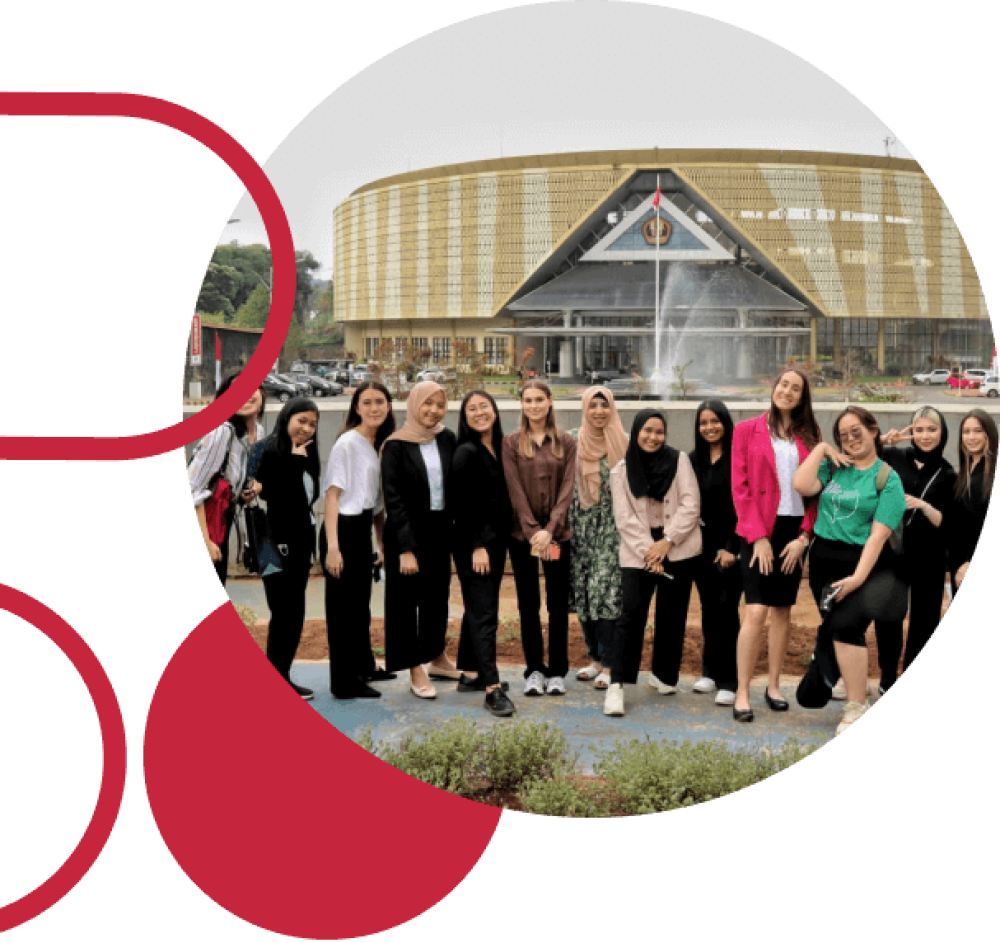
The Makassar Sustainability Internship is open to Griffith undergraduate students with an interest sustainability and environmental innovation in areas such as environmental science, agriculture emissions reduction, clean energy and real-world experience, in one of Australia's most important regional partners. Based in Makassar, South Sulawesi, this four-week program combines Indonesian language training, team-based internships, and cultural immersion.
You will spend your first week studying Indonesian language with Universitas Hasanuddin (UNHAS), before moving into a three-week internship with a local host organisation working in the sustainability space. Placements are matched to your interests and field of study, co-supervised by Griffith and UNHAS academics, and complemented by cultural activities, networking events, and site visits to sustainable organisations across the region. Upon completion, you will receive a joint certificate from UNHAS and International Internships (II), and may be eligible to count the program toward your WIL unit or flexible module.
We will work with you to help you earn university credit. You may also be eligible for funding, including a New Colombo Plan grant of $4,000 and an OS-HELP loan of up to $10,130.
The program next starts on 16 Janaury 2027 and runs for 4 weeks. Applications close on 30 October 2026
Program details
Build networks, develop your language skills and get real work experience
Week 1
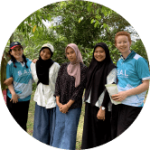
Week 1 is all about getting settled, getting oriented, and getting to know Makassar. You will attend Indonesian language classes at Universitas Hasanuddin, take part in cross-cultural workshops, and dive into cultural activities across the city. You will also be paired with local Indonesian student buddies who will help you find your feet - and show you their favourite spots along the way.

Orientation

Language Classes

Make Friends
Cultural Activities
Makassar – Read more about the location & what we do there
Makassar is the capital of South Sulawesi and one of Indonesia’s most dynamic cities. It is a major port and commercial hub with a rich trading history and a growing role in the country’s clean energy and sustainability transition. By being based in Makassar, you will gain first hand insight into the forces driving environmental change in the region, learning from local decision-makers, researchers and industry leaders.
Makassar has a uniquely special connection with Australia, long before European settlement, Makassarese fishermen were making annual voyages to the northern Australian coast, making them the first recorded foreign visitors to Australia and forging ties that endure in the culture and heritage of Aboriginal communities to this day.
Your time in Makassar will include:
Airport pickup
You will be met at the airport when you arrive in Makassar and taken to your hotel.
Orientation
We will show you around and give you all the info you need to help you be safe, mobile and happy while you are here.
Language Classes
Most weekday mornings in your first week will be spent at UNHAS attending Indonesian language classes, giving you the confidence to engage meaningfully throughout the rest of the program.
Internship
For the following three weeks, you will work with your host organisation most afternoons, applying your skills to real sustainability challenges. At the conclusion of your placement, you will present your outcomes to your supervisors and the group.
Universitas Hasanuddin (UNHAS) One of Indonesia’s most respected universities and a founding partner of this program, UNHAS will be your academic home for the first week. During orientation, specialists will present on the intersection of industrial development, sustainability, and Indonesia’s clean energy transition giving you a strong foundation before your internship begins. UNHAS students will also join internship teams and activities throughout the program, offering local knowledge and perspective that will deepen your understanding of the issues you are working on.

Week 2 - 4
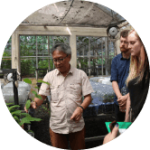
In Week 2, your internship begins. Working alongside a team of Australian and Indonesian students, you will be embedded with a local host organisation tackling real challenges across emissions reduction, clean energy, or environmental innovation. This is your opportunity to apply your skills in a professional setting, collaborate across cultures, and contribute to work that genuinely matters - all while building the kind of international experience that sets you apart.

Visit Decision Makers

Explore
24/7 Support
Team Internship
Available Projects
Yayasan Konservasi Laut (YKL) Indonesia
Yayasan Konservasi Laut (YKL) Indonesia is a non-profit organisation based in Makassar, South Sulawesi, that works to promote the sustainable management and conservation of coastal, marine, and small-island ecosystems. The organisation combines conservation, research, community empowerment, education, and advocacy to address environmental challenges while supporting the livelihoods and resilience of coastal communities. YKL's vision is centred on creating sustainable oceans and empowered, resilient coastal communities through collaborative and community-based approaches.
Community-Based Octopus Conservation and Economic Empowerment Program “PROTEKSI GAMA” in the Spermonde Islands
Project Background
One of YKL’s programs is PROTEKSI GAMA (Community Based Octopus Economic Strengthening and Conservation Program) is an initiative of YKL Indonesia developed in the Spermonde Islands, especially Langkai Island and Lanjukang Island, to strengthen small-scale octopus fisheries management while maintaining marine ecosystems and important species. This program encourages fishing communities to become the main actors in marine resource governance through the implementation of an open-and-close system of octopus catches and times, strengthening fishermen’s capacity, monitoring catches, improving the quality of fishery products, and strengthening community-based institutions and supervision.
The implementation of GAMA PROTECTION shows that community-based marine resource management not only contributes to fisheries sustainability, but can also be an entry point to build public awareness of the protection of coastal and marine ecosystems. On Lanjukang Island, the process has resulted in local experiences and practices in protecting watersheds, including the protection of coral reefs and important species such as sea turtles. This initiative has also built knowledge, institutional experience, stakeholder networks, and positive narratives about the relationship between conservation and livelihoods of small island communities.
Key Responsibilities
During the internship, students will support the Marine Conservation Foundation (YKL) in identifying and developing a community-based tourism approach on Lanjukang Island. Internship activities will combine field observation, interaction with the community, mapping tourism potential, tourism planning, communication, and the preparation of practical tourism guidelines.
Students will be responsible for:
- Compile a map of sustainable and community-based tourism potential.
- Develop sustainable and community-based tourism guidelines.
- Compile recommendations for sustainable and community-based tourism experience products.
- Presenting results and recommendations
Project Output
At the end of the internship, you will have the opportunity to present your experiences. This presentation will include reflections on your journey, the challenges you faced, and the insights you gained throughout your time at the organisation.
Hasanuddin University
Hasanuddin University is a leading higher education institution in Eastern Indonesia with strong academic, research, and community engagement activities in agriculture, plant health, environmental management, rural innovation, and sustainable farming systems. Through the Faculty of Agriculture, Hasanuddin University supports applied research, farmer empowerment, plant disease management, and technology transfer for smallholder farming communities.
Project 1: Climate Adaptation, Wildlife Risk and Sustainable Farm Management
Project Background
Enrekang Regency in South Sulawesi has strong potential as a highland cocoa learning site, with mountainous terrain, temperatures around 24 to 27°C, high humidity, and farming communities that depend on agriculture. For Griffith students it offers a sharp contrast, since cocoa is rarely farmed in Australia while chocolate is widely consumed.
But cocoa here faces serious productivity problems. Biotic stress comes from pod borer, wild boar and squirrel damage, vascular streak dieback, and black pod disease, all worsened by farms sitting at the forest edge. Abiotic stress from poor soil fertility, acidity, and drought weakens the trees further, while climate change drives erratic rainfall and humid, disease-friendly conditions. Weak post-harvest handling adds to this, as farmers still sun-dry beans without controlling moisture or hygiene, and harvest with a parang that wounds trees and invites pathogens.
Project Objective
The main objective of this project is to provide Griffith University students with a field-based New Colombo Plan learning experience in climate-smart cocoa farming while supporting practical interventions to improve cocoa farm resilience through wildlife-risk assessment, drought adaptation, microclimate management, and sustainable farm sanitation practices in the highland areas of Enrekang.
Specifically, students will:
- Assess climate-related risks affecting cocoa production.
- Identify wildlife-related production constraints.
- Evaluate microclimate conditions influencing cocoa health.
- Assess current canopy and farm sanitation practices.
- Develop practical climate-smart management recommendations for cocoa farmers.
Project Output
- A practical guide for identifying wildlife disturbance, forest-edge risk, pod damage patterns, and non-destructive mitigation options.
- A package of farmer-friendly posters, field cards, short videos, and infographics explaining wildlife mitigation, forest-edge risk management, drought adaptation, microclimate management, shade regulation, canopy management, and farm sanitation practices.
- A short reflection report describing how students learn from Enrekang’s gotong royong culture, religious life, wooden-house settlements, mountain water systems, and agriculture-based livelihoods.
- A final presentation by Griffith University students to Hasanuddin University, cocoa farmer groups, and local stakeholders, explaining findings, intervention design, and recommended next steps.
Project 2: Farm Assessment, Pest, Disease and Soil Health
Project Background
Enrekang Regency in South Sulawesi has strong potential as a highland cocoa learning site, with mountainous terrain, temperatures around 24 to 27°C, high humidity, and farming communities that live off agriculture. Strong gotong royong and diverse food production let cocoa connect to broader farming systems. For Griffith students it offers a sharp contrast, since cocoa is rarely farmed in Australia while chocolate is widely consumed.
But cocoa here faces serious productivity problems. Biotic stress comes from pod borer, wild boar and squirrel damage, vascular streak dieback, and black pod disease, all worsened by farms sitting at the forest edge. Abiotic stress from poor soil fertility, acidity, and drought weakens the trees, while climate change drives erratic rainfall and humid, disease-friendly conditions. Post-harvest handling is weak too, as farmers still sun-dry beans without controlling moisture or hygiene, and harvest with a parang that wounds trees and invites pathogens.
Project Objective
This project aims to provide students with practical experience in identifying the major biological and environmental constraints affecting cocoa productivity in the highland areas of Enrekang. Students will assess farm conditions using simple precision agriculture tools and develop practical recommendations for improving plant health and soil quality.
Specifically, students will:
- Assess cocoa farm conditions using GPS mapping and field observations.
- Identify major pest and disease problems, including Cocoa Pod Borer (CPB), Vascular Streak Dieback (VSD), and Black Pod Disease.
- Assess soil health, soil acidity, and basic fertility conditions.
- Apply practical precision farming techniques for field diagnosis.
- Develop environmentally friendly recommendations suitable for smallholder cocoa farmers.
Project Output
- A concise report identifying the major causes of low cocoa productivity in Enrekang, focusing on pest and disease incidence, soil health, soil acidity, and other farm-related production constraints.
- A simple cocoa farm risk map showing hotspots of Cocoa Pod Borer (CPB), VSD, Black Pod Disease, soil acidity, and other key farm production constraints.
- A photo-based guide for identifying cocoa pod borer damage, VSD symptoms, black pod disease, and canopy stress.
- A practical recommendation sheet covering soil pH management, organic matter improvement, mulching, shade regulation, erosion reduction, and drought adaptation.
- A short reflection report describing how students learn from Enrekang’s gotong royong culture, religious life, wooden-house settlements, mountain water systems, and agriculture-based livelihoods.
- A final presentation by Griffith University students to Hasanuddin University, cocoa farmer groups, and local stakeholders, explaining findings, intervention design, and recommended next steps.
Project 3: Harvesting, Post-Harvest Innovation and Farmer Extension
Project Background
Enrekang Regency in South Sulawesi has strong potential as a highland cocoa learning site, with mountainous terrain, temperatures around 24 to 27°C, high humidity, and farming communities that live off agriculture. Strong gotong royong and diverse food production let cocoa connect to broader farming systems. For Griffith students it offers a sharp contrast, since cocoa is rarely farmed in Australia while chocolate is widely consumed.
But cocoa here faces serious productivity problems. Biotic stress comes from pod borer, wild boar and squirrel damage, vascular streak dieback, and black pod disease, all worsened by farms sitting at the forest edge. Abiotic stress from poor soil fertility, acidity, and drought weakens the trees, while climate change drives erratic rainfall and humid, disease-friendly conditions. Post-harvest handling is weak too, as farmers still sun-dry beans without controlling moisture or hygiene, and harvest with a parang that wounds trees and invites pathogens.
Project Objective
This project aims to improve cocoa quality through better harvesting practices, post-harvest handling, and farmer extension materials that promote environmentally friendly and practical innovations.
Specifically, students will:
- Assess existing harvesting practices.
- Evaluate current post-harvest drying methods.
- Design simple, low-cost improvements suitable for smallholder farmers.
- Develop extension materials to support farmer adoption of improved practices.
Project Output
- A simple SOP for harvesting, pod selection, tool hygiene, branch-wound prevention, infected pod removal, and farm sanitation.
- A practical drying improvement model such as raised drying racks, solar drying concept, drying schedule, moisture checklist, and hygienic drying procedure.
- A package of farmer-friendly posters, field cards, short videos, and infographics explaining safer harvesting practices, hygienic post-harvest handling, low-cost drying innovations, bean quality improvement, and practical recommendations for smallholder cocoa farmers.
- A short reflection report describing how students learn from Enrekang’s gotong royong culture, religious life, wooden-house settlements, mountain water systems, and agriculture-based livelihoods.
- A final presentation by Griffith University students to Hasanuddin University, cocoa farmer groups, and local stakeholders, explaining findings, intervention design, and recommended next steps.
Dates & fees
| Details | Summer Program |
|---|---|
Arrive in Indonesia |
30 January 2027 |
Depart Indonesia |
6 March 2027 |
Duration |
5 weeks |
Apply by |
3 October 2026 |
Program fee |
$5,300 |
NCP funding* |
$5,000 |
* NCP funding is limited and only available to eligible students. Learn more.
Inclusions & exclusions
Inclusions
- Industry project placement and support
- Accommodation in a mixture of private accommodation in shared apartment or co-living arrangement and twinshare (same gender) accommodation at a hotel
- Pre-departure support, including visa advice and sponsorship where required
- Administrative support, including academic credit approval (if applicable)
- Airport transfers on nominated arrival and departure dates
- Immersive orientation program
- Intercultural communication workshop
- Approximately 15 hours of Indonesian language classes
- Career development workshop
- Explore the surrounding areas through an organised weekend trip
- Cultural and social events with Indonesian buddies
- 24/7 in-country support
- Weekly check-ins
- International internships completion certificate
- Connection with Indonesian students from local universities
Exclusions
- Internet, phone and home working set-up
- Flight costs, airport taxes and associated costs
- Visa costs and passport fees
- Travel insurance
- Meals and drinks
- Enrolment fees for any subjects at your university
- Host-specific requirements (ie. uniform, safety equipment)
- Vaccinations (if required)
- Laundry, toiletries and amenities
- Extra activities and travel, or any other items of a personal nature
- Daily transportation costs
Why Indonesia?
Opportunities abound with this key partner and centre for regional strategy and economic development
Indonesia has the largest economy in Southeast Asia, and is predicted to be the world’s fifth-largest economy by 2030. Australia and Indonesia signed the Indonesia-Australia Comprehensive Economic Partnership Agreement (IA-CEPA) in 2020, marking the beginning of a new era of enhanced strategic and commercial cooperation. Opportunities abound in a diverse range of areas, including business and trade, finance, technology, infrastructure development, education, environmental conservation, security and more.
Click here to learn more about the opportunities Indonesia has to offer you.

Course credit
We support you to earn credit for your course
Students can earn academic credit for this program through the Griffith Flexible Module program. Students are also welcome to join the program without earning academic credit, but will not be eligible to receive an NCP grant, as detailed below. Both domestic and international students are eligible to apply.
Head to the Griffith Short-Term Programs Page or contact goglobal@griffith.edu.au for more information on how to apply for credit.
Or simply book a chat with us and we can work through your options.
Grants & funding
Limited $4,000 NCP grants available for eligible students!
New Colombo Plan (NCP)
You are likely to be eligible for an NCP grant if:
- You are an Australian citizen
- You are an undergraduate student
- This experience will count toward your uni degree
- You have received no more than one NCP grant previously (no more than two in total)
You can earn an NCP grant of $4,000 for joining this program. See ‘Dates & Fees’ for the program costs and inclusions. There are limited NCP grants available and applications received early will be prioritised. We work directly with you and your faculty to confirm your eligibility for an NCP grant before finalising your position on the program.
Please note you are still eligible to apply for the program even if you are not eligible to receive NCP funding. Contact International Internships for more information.
International Students
International students may be eligible for a $3000 grant through Griffith International Office.
Check your eligibility here.
OS-HELP repayable loan
OS-HELP is a loan available to eligible students enrolled in a Commonwealth supported place who plan to undertake some of their study overseas. If your experience with us will count towards the requirements for your Commonwealth supported course in Australia, you may be able to borrow up to $10,130. You may also be eligible to borrow an extra $1,345 if you study Indonesian language in preparation for your internship. Learn more about OS-HELP here.
Other funding options
Learn about all other funding options that might be available to you, on our webpage here.
Past Information Session
Find out more about internships we offer, fees, grants and credit
Online information session
Find out more about the program, fees, grants and credit

Apply by 30 October 2026

Apply to your university

Confirm your spot

Finalise and prepare
What next?
Book in a chat with us to discuss your options
We make everything as easy as possible for you, and it all starts with a commitment-free consultation.
Click below to book your obligation-free consultation, or just email us with any questions:
info@internationalinternships.com.au
What our interns say
Real experiences, real impact – hear from those who’ve been there


